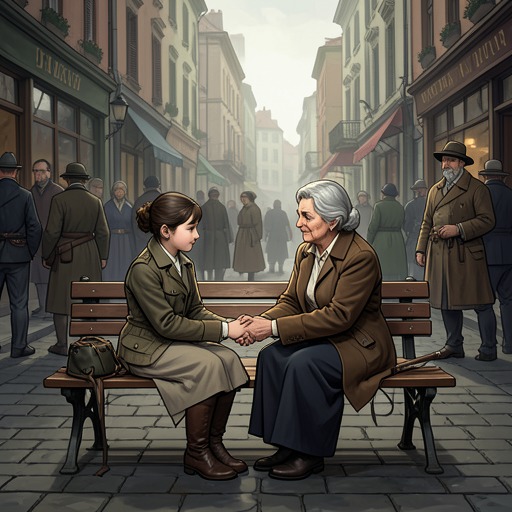
Amaia Salazar—Rosario: mother and daughter
Legado en los huesosAmaia Salazar’s relationship with Rosario is defined by the persistence of childhood fear into adult life. As a five-year-old, Amaia experiences her mother as a nightly threat; later, while struggling with the demands of caring for Ibai, she worries that the same cruelty might exist in herself. The relationship thus binds maternal love to a fear of repetition: Amaia’s determination to be a good mother is inseparable from the mother she remembers.
Childhood Fear and the Night
At five, Amaia does not want to sleep in her own bed. She expects Rosario to come and watch her with cold eyes and a look of contempt. Even with her eyes closed, the child believes she can sense her mother’s approach and the hatred in her breathing. She lies rigid, trying not to move or reveal that she is awake, while fear grows to the point that she can barely control her body.
Rosario’s whispered threat that she will not eat Amaia that night turns bedtime into a test of endurance. The danger is not simply an imagined presence in the dark: Amaia’s dread is attached to her mother’s deliberate approach and words. The scene establishes the power imbalance at the center of their relationship, with the child left to manage terror by obeying an order not to open her eyes.
Seeking Safety with Her Sisters
Amaia knows that Rosario will not approach her if she sleeps beside her sisters. After her parents have gone to bed, she therefore pleads with them to let her share their room, promising to serve them in return. The arrangement makes safety conditional: Flora rarely agrees, and when she does, she expects Amaia to be her servant the following day.
Rosaura is more easily moved by Amaia’s tears and sometimes lets her stay. For the frightened child, crying is easy, and her sister’s willingness offers a practical refuge from the nightly threat. Amaia’s relationship with Rosario is thus also visible in the strategies it forces her to adopt: she seeks protection not by confronting her mother, but by bargaining for closeness with her sisters.
Fear Carried into Motherhood
As an adult, Amaia’s difficult feelings about nursing Ibai bring her childhood history into the present. When James suggests that the demands of continued breastfeeding may not fit her work, Amaia internally tries to give shape to what she feels. She wants to do well for Ibai, but also for herself and for the girl she once was—the daughter of a bad mother. Her need to be a good mother becomes bound up with the fear that failing at motherhood would make her bad like Rosario.
Amaia privately questions how much of her mother is in her, and whether her frustration means that something is wrong. She feels tired and unsuccessful rather than fulfilled by the ideal of motherhood she expected. Instead of expressing that vulnerability, she answers James by defending her work as a police officer, reminding him that he knew and accepted her career when they married. Her sharp reply—including her insistence that marriage is not a life sentence—shows the strain of the exchange, while the thoughts she does not voice reveal how directly her fear of Rosario bears on her own sense of herself as a mother.